
The Hidden Gem Problem
- Stephanie Jackson

- Apr 12
- 8 min read
Updated: Apr 12
Launching a Hospitality Brand Inside a 50-Year Architecture Firm
There is a particular kind of frustration that comes from watching great work go unnoticed. Not because the quality is lacking, but because the packaging is wrong. I spent months stewing inside that frustration while leading the brand launch for Interior Studio DPA, and what I found reshaped how I think about the relationship between brand architecture and market performance.
This is the story of how a hospitality design studio with a 41% win rate was invisible to 82% of its target market, and how I curated a rag-tag group of passionate designers to turn a perception problem into a pipeline.

The Crack in the Foundation
Davis Partnership Architects is a 50-year-old architecture firm. Respected. Established. Known for corporate campuses, healthcare facilities, and commercial buildings. Inside that firm, tucked behind the parent brand's shadow, was a hospitality interior design studio with over 12 years of experience and more than 40 completed projects across hotels, resorts, and restaurants.
The studio's win rate, 41%, was actually higher than the firm average. When developers found them and evaluated their work, they chose them. The problem was brutal in its simplicity: almost no one was finding them.
The numbers told the story. Monthly RFP invitations were running 45% below the firm average. Inbound inquiries lagged by 63%. Referral-sourced leads trailed by 71%. And website-attributed leads were nearly nonexistent, 87% below what other studios in the firm were generating. The studio was experiencing a full mid-life identity crisis.
Thirty-eight percent of lost deals came down to a single phrase from the prospect: "We didn't know DPA did hospitality."
Diagnosing the Real Problem
My instinct, was to look for a capability gap. Maybe the portfolio was thin. Maybe the team lacked credentials. But 119 research inputs later, across stakeholder interviews, developer surveys, referral partner feedback, and lost-deal analysis, the diagnosis pointed somewhere else entirely.
This was not a capability problem, it was a brand architecture problem.
When we showed DPA's hospitality projects to developers without any branding attached, they rated the design quality 4.2 out of 5.0. When we told them the same work was by Davis Partnership Architects, that score dropped to 3.4. A measurable perception penalty, not because the work changed, but because the name changed.
The parent brand, built over five decades around corporate and healthcare architecture, was actively suppressing the credibility of its own hospitality practice. Eighty-three percent of external interviewees described DPA in terms like "healthcare architecture" and "education buildings." The hospitality studio was invisible not by accident, but by inheritance.
The research surfaced five critical findings that would become the strategic backbone of everything that followed.
First, the parent brand suppression was real and quantifiable.
Second, specialist positioning was driving selection decisions at a rate of 2.3x over generalist firms.
Third, curated portfolios were generating 3.1x more RFP interest than mixed portfolios.
Fourth, architecture heritage was actually a differentiator when framed correctly, with 47% of developers citing integrated architecture and interiors as a top-three selection criterion.
Fifth, place-based design was ascendant, with 73% of new Mountain West hotel developments emphasizing sense of place and no specialist firm owning that territory.
Those five findings became the foundation for every strategic decision that followed. Every brand choice, every message, every word in the vocabulary traces back to that research.
Building the Brand Architecture
The strategic question was deceptively simple: how do you separate enough to establish specialist credibility while staying connected enough to inherit 50 years of architecture heritage?
We evaluated four options. A fully independent brand would have given us a clean slate but would have abandoned the credibility of five decades. An endorsed brand, something like "Interior Studio, a DPA practice," still carried too much of the parent association. A sub-brand like "DPA Hospitality" felt corporate and divisional, exactly the perception we were trying to escape.
The answer was a nested brand: Interior Studio DPA.
"Interior Studio" leads. It signals the specialty first. It speaks the language of hospitality developers who are scanning for designers that live and breathe their world, not firms that dabble in it between corporate campuses. "DPA" anchors. It carries the weight of a 50-year institution without letting that weight crush the intimacy of a focused studio practice.
The combination creates what I think of as the "best of both" perception. Studio-scale attention backed by architecture-firm depth. It is a brand architecture decision that required understanding not just what the market wanted, but what the parent brand was unintentionally communicating.

Positioning Into White Space
With the brand architecture settled, positioning became a matter of finding the territory that was both true to the studio's strengths and unoccupied by competitors.
The competitive landscape broke into three tiers. Global hospitality specialists like HBA, Wilson Associates, and Rockwell Group dominated the high end but were perceived as too large and too expensive for mid-market and boutique projects. Regional boutique studios had the intimacy but lacked the technical architecture depth. And large multi-sector firms, the category DPA currently fell into, treated hospitality as one vertical among many.
Interior Studio DPA was targeting the unoccupied quadrant: specialist but accessible. More focused than the generalist firms, more approachable than the global giants. And critically, no Mountain West firm held that position.
| "For hospitality developers and boutique hotel owners, Interior Studio DPA is a | dedicated hospitality interior design studio within Davis Partnership Architects that | combines curated design craft with architectural depth."
We built four brand pillars underneath that statement.
Hospitality-First, because the studio's sole focus is hospitality, not one vertical among many.
Rooted in Place, because design should begin with geography, culture, and the stories of a location, not an imported template.
Architecture plus Interiors, because 50 years of architecture heritage enables integrated design from structure to surface that pure-interiors firms cannot match.
Studio Intimacy, because principal-led engagement with a curated team, backed by full-scale infrastructure, gives clients the best of both worlds.

The tagline distilled it: "Hospitality design, rooted in place."
Translating Research Into Copy
This is the part of the process that I think separates strategic product marketing from brand copywriting.
Every word in the Interior Studio DPA vocabulary was selected based on research data and has a documented rationale for why it was chosen, and what it replaced.
"Studio" was chosen over "division" or "department" because it signals intimacy, curation, and creative focus.
"Rooted" connects to the place-based design philosophy and implies permanence.
"Hospitality" declares the specialty with no ambiguity.
"Place" anchors the design approach in geography and culture.
"Principal-led" directly addresses the number one concern about large-firm team staffing. "Craft" signals quality, intentionality, and human skill.
Equally important were the words we rejected.
"Solutions" was too generic.
"Innovative" was overused to the point of meaninglessness.
"Full-service" implied generalist, which contradicted our specialist positioning.
"Leverage," "turnkey," and "synergy" were corporate jargon that would have undermined the warm, narrative tone of voice the brand required.

The tone itself was carefully calibrated: warm but authoritative, specific rather than vague, narrative rather than promotional, cultured without being pretentious, grounded rather than flashy. This was a brand that needed to name materials, places, and decisions, not hide behind abstractions.
The Go-to-Market Engine
With the brand built, the GTM strategy followed a four-phase model that I think of as Brand-Led Demand Generation.
Phase one was building the brand: identity, the dedicated website at interiorstudiodpa.com, and a curated hospitality-only portfolio. Phase two was activating the brand through content, events, and outreach. Phase three was converting through the brand, turning awareness into RFP pipeline and inbound leads. Phase four was growing the brand through thought leadership, an advocacy program, and a referral partner network.
This is the part where I will mention a lot of investment and money talk happened. However, those conversations and numbers are confidential. Just know it was a long arduous process, but we made it out the other side.
The channel strategy prioritized based on where the research told us the audience actually lived. LinkedIn for professional network visibility and thought leadership. Instagram for the visual portfolio that the design community gravitates toward. A referral partner network targeting 55 architecture firms, consultants, and brokers, because referrals were historically the highest-converting channel. And industry PR for the third-party credibility validation that a new brand needs.

Enabling Before Launching
One of the principles I was most deliberate about was this: nobody at the firm should learn about Interior Studio DPA from social media. Internal enablement had to ship before the external launch.
We designed five enablement sessions, each calibrated to the audience. Studio principals got a three-hour deep dive working session. The business development team got 60 minutes of training. Marketing was consistently involved from the start and were updated with progress as it was being developed. DPA leadership got a 45-minute executive briefing. And the full firm of roughly 50 people got a 15-minute announcement in our monthly "town halls".
The business development and marketing team were briefed on a pitch package which included competitive battlecards for three scenarios: competing against global hospitality firms, where we positioned as "studio-scale attention they can't match"; competing against boutique studios, where we positioned as "architecture depth they don't have"; and competing against multi-sector firms, where we positioned as "hospitality focus they can't claim."
We built objection handling for six common pushbacks, from "we've never heard of you" to "your team seems small" to "we typically work with a competitor." Each response was rooted in the positioning framework, turning the objection into a proof point for the brand's differentiated value.
Measuring What Matters
The OKRs were structured around three objectives. The first was establishing Interior Studio DPA as a recognized hospitality design brand, measured by aided brand awareness moving from 18% to 65% among Colorado developers within 12 months, website traffic growing from zero to 2,000 monthly unique visitors, and industry media mentions reaching six per quarter.
The second objective was closing the hospitality pipeline gap. Monthly RFP invitations needed to move from 6.1 to 12 or more. Inbound inquiries from 3.2 to 15 per month. Referral-sourced leads from 4 to 18 per quarter. Website-attributed leads from 0.8 to 12 per month.
The third objective was generating measurable revenue impact: all of which is yet again being redacted, but really you should thank me for cutting it short, this post is already getting very long.
The optimization cadence was weekly pipeline reviews, bi-weekly content performance checks, monthly full marketing metrics reviews, quarterly OKR progress assessments, and semi-annual launch retrospectives. At the six-month mark, a decision framework would trigger: above 80% OKR achievement means continue and expand, 50 to 79% means optimize and adjust, and below 50% means pivot the strategy.
What the Launch Taught Me
Every PMM project teaches you something about the discipline itself if you are paying attention. This one taught me three things I will carry forward.
First, the most dangerous business problems are the ones that look like capability gaps but are actually perception gaps. If I had built a better portfolio without changing the brand architecture, we would have made a beautiful brochure for a studio that still no one could find. The research was the difference between a cosmetic fix and a structural one.
Second, brand architecture decisions are product marketing decisions. The choice between a nested brand, a sub-brand, an endorsed brand, and a fully independent brand is not a creative exercise. It is a strategic framework with measurable implications for market positioning, sales enablement, and pipeline generation.
Third, the bridge between research and copy is where the craft lives. Anyone can conduct a survey. Anyone can write a tagline. The discipline of connecting the two, of being able to point to the data behind every word choice and the strategic rationale behind every rejected alternative, that is what separates a PMM from a marketing generalist.
Interior Studio DPA launched with 21 strategic deliverables across five phases, a secret investment, and a clear thesis: the studio did not have a capability problem; it had a brand architecture problem that required a product marketing solution. The work existed. The talent existed. The win rate proved the value proposition. What was missing was the beautiful story that would let the market see it clearly.
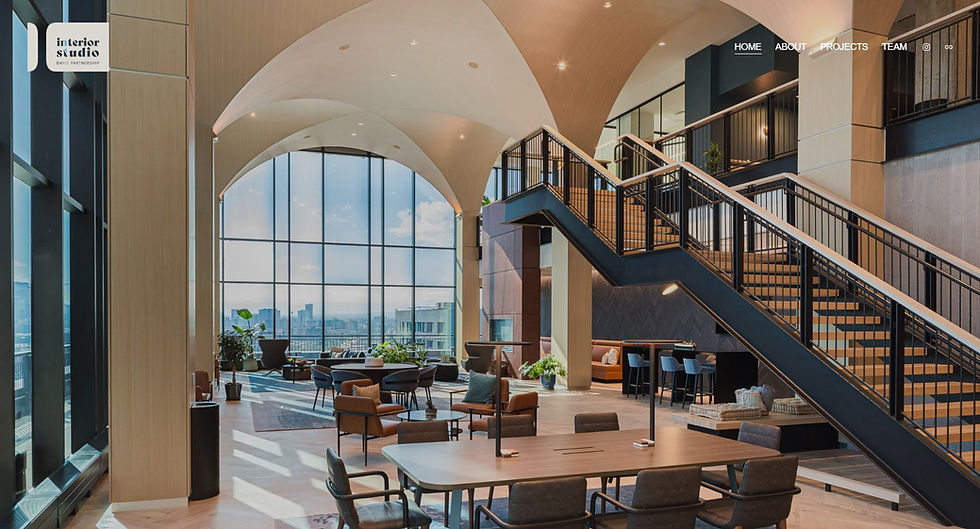
The story is built. Now we measure.
